Press Statement
Lusaka, 15th September 2026: On International Day of Democracy, Panos Institute Southern Africa (PSAf) reaffirms that democracy is strengthened when citizens can access information, participate meaningfully in public affairs and hold those entrusted with public power accountable.
Democracy goes beyond elections. It depends on informed citizens who can understand and influence public decisions, participate in governance, scrutinise the use of public resources and demand accountability. Access to information, information integrity and open government are central to this.
PSAf believes that access to information is a fundamental democratic right. An informed citizenry strengthens accountability by enabling people to understand public decisions, the use of public resources and policies that affect their lives.
We mark International Day of Democracy as Zambia’s Access to Information Act gains momentum, offering an important opportunity to deepen transparency and strengthen relations between citizens and public institutions. However, gaps remain, including the delayed issuance of the Rules which form part of the statutory instruments required for implementation of the law. Effective implementation anchored on proactive disclosure, responsive institutions and public awareness remain essential, as many information holders have yet to appoint information officers or meet other requirements under the ATI Act. PSAf therefore calls on public institutions to embrace openness by routinely publishing public-interest information that is accessible, understandable and available to all, including marginalised communities.
We also mark Democracy Day amid a rapidly changing information environment. Digital platforms, artificial intelligence and increasingly sophisticated manipulation techniques have expanded participation and access to information, but have also created serious risks. Misinformation, disinformation, hate speech and manipulated content can undermine trust, distort democratic debate and weaken informed decision-making.
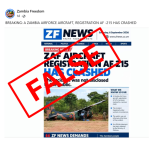
PSAf has continued to contribute to strengthening information integrity in Zambia through the iVerify Zambia Fact Checking and Response Mechanism which helps citizens and other stakeholders identify and respond to misinformation, disinformation and harmful content. Through iVerify Zambia, PSAf has strengthened efforts to monitor, detect, verify and respond to potentially misleading information, including through fact-checking, media monitoring, human verification and the use of technology. The initiative provides a channel through which citizens can submit suspicious claims, images, videos and other content for verification, helping to promote a more informed public discourse.
Strengthening information integrity requires government, the media, civil society, technology platforms, academia and citizens to work together. Independent journalism, fact-checking, media and information literacy, transparent communication and responsible technology use all matter in this regard. Citizens should be empowered not only to access information, but also to question, verify and critically assess the information they encounter before accepting or sharing it.
Furthermore, the day reminds us that pen government enables citizens to participate in decisions that affect their lives. Transparency, participation, accountability and access to information should guide policy and decision-making beyond elections. Zambia’s Open Government Partnership draft National Action Plan 2026–2028 offers an opportunity to turn commitments into tangible governance improvements. As a member of the OGP National Steering Committee and OGP CSO Alliance Steering Committee, PSAf believes open government should help citizens access information, participate in decision-making, monitor implementation and demand explanations when institutions fall short.
Democracy must work for everyone. Women, young people, persons with disabilities, rural communities and other marginalised groups need meaningful opportunities to access information and participate in public affairs through inclusive, accessible and responsive communication.
On this International Day of Democracy, PSAf calls on information holders to strengthen proactive disclosure and meet their access-to-information obligations; the media to provide independent, accurate and public-interest journalism; civil society to empower citizens to claim their right to information and participate in public affairs; and citizens to seek information from credible sources and verify information before sharing it. We further encourage citizens to use the Access to Information Act to request information of public interest and use information obtained to strengthen public participation and accountability.
Democracy thrives when citizens are informed, included and empowered. PSAf remains committed to a Southern Africa where poor and marginalized citizens can access information, participate meaningfully in public life, engage with an information environment grounded in integrity and hold institutions accountable.
Issued by:
Vusumuzi Sifile
Executive Director, Panos Institute Southern Africa
Email: vusa@panos.org.zm / general@panos.org.zm