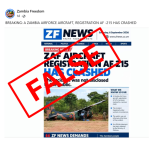
Claim
A video circulating on social media falsely depicts prominent Zambian banker and Absa Bank Zambia Managing Director Mizinga Melu promoting a high-return investment scheme.
Over the past week, the video has been shared on several social media platforms, including the Meet New People’s Post Facebook page. In the video, a person appearing to be Mizinga Melu tells viewers that they can earn returns of at least K10,500 per month, as well as K4,500 within 24 hours of making an initial deposit.
The video urges viewers to join the scheme quickly and make deposits, claiming that the number of available places is limited.
Verdict: False
Rating Justification
iVerify Zambia conducted digital and visual analysis of the video and found multiple indicators consistent with AI-generated or digitally manipulated content.
The digital analysis assigned the video a 92% probability of being AI-generated, with 0% human-generated content detected by the tool used. This result was considered alongside other observable inconsistencies in the video and direct verification with Mizinga Melu.
The visual and content analysis identified several red flags:
- Inconsistent financial figures: The narration refers to a return of K4,500, while the figure displayed on the phone screen is K245,000. This discrepancy raises questions about the authenticity and reliability of the content.
- Typical scam-style language: The video uses phrases such as “waking up and finding extra K4,500 in your account and you did nothing, you just slept”, “don’t skip this video” and “click the link below this video”. Such language is commonly used in online investment scams and other deceptive promotions to create urgency and encourage users to act without verification.
- Suspicious website: The link promoted in the video, BREAKINGTODAY.LIVE, leads to a webpage presented as though it were the Zambia Daily Mail. However, the website address does not correspond to the official Zambia Daily Mail website, which is daily-mail.co.zm.
- Fake registration process: Clicking icons on the purported Zambia Daily Mail webpage directs users to a registration form requiring them to provide information to participate in the investment promotion. This is inconsistent with the official website of the Zambia Daily Mail and is a further indication that the page is being used to promote a fraudulent scheme.
- Unnatural speech and movements: The person presented as Mizinga Melu displays speech patterns, facial movements and gestures that appear unnatural and inconsistent with authentic video footage, providing additional indicators of digital manipulation.
Verification with Mizinga Melu
As part of its verification process, iVerify Zambia contacted Mizinga Melu, who confirmed that the video circulating on social media was AI-generated and published without her consent.
Melu stated that she had not endorsed, promoted or authorised the investment scheme featured in the video.
She further warned members of the public against being deceived by the video and urged social media users to verify investment offers and other suspicious content through credible and official sources before taking any action.
Conclusion
The video circulating on social media falsely uses the image and likeness of Mizinga Melu to promote an investment scheme that iVerify Zambia found to be deceptive.
Digital analysis assigned the video a 92% probability of being AI-generated, while visual and content analysis identified several additional warning signs, including inconsistencies between the figures mentioned in the narration and those displayed on the phone screen, scam-style language, suspicious website links and unnatural speech and facial movements.
The video’s authenticity was further undermined by direct verification with Mizinga Melu, who confirmed that she did not make or authorise the video and had not endorsed the investment scheme.
This case illustrates how generative artificial intelligence can be misused to impersonate trusted individuals and lend credibility to deceptive financial promotions. AI-generated videos can imitate a person’s appearance, voice and mannerisms convincingly enough to mislead viewers, particularly when combined with familiar institutional brands and promises of quick financial returns.
Social media users should therefore exercise caution when encountering investment opportunities promoted through videos, advertisements or messages online. Promises of unusually high or rapid returns, pressure to act immediately, requests for deposits, and links to unfamiliar websites are important warning signs.
Before providing personal or financial information, making a payment or clicking an unfamiliar link, users should independently verify the offer with the individual, company or institution being represented, using contact details obtained from its official channels.
A familiar face or voice is no longer sufficient evidence that a video is authentic.
Help Stop the Spread of Misinformation
Before sharing election-related or public affairs information, verify whether it comes from credible and official sources. If you encounter suspicious claims, images or videos, submit them to iVerify Zambia for verification.
Email: factcheck@panos.org.zm
WhatsApp: +260 762 974 750
Together, we can reduce the spread of misinformation and disinformation, promote access to accurate and verified information, and help protect the integrity of public discourse.